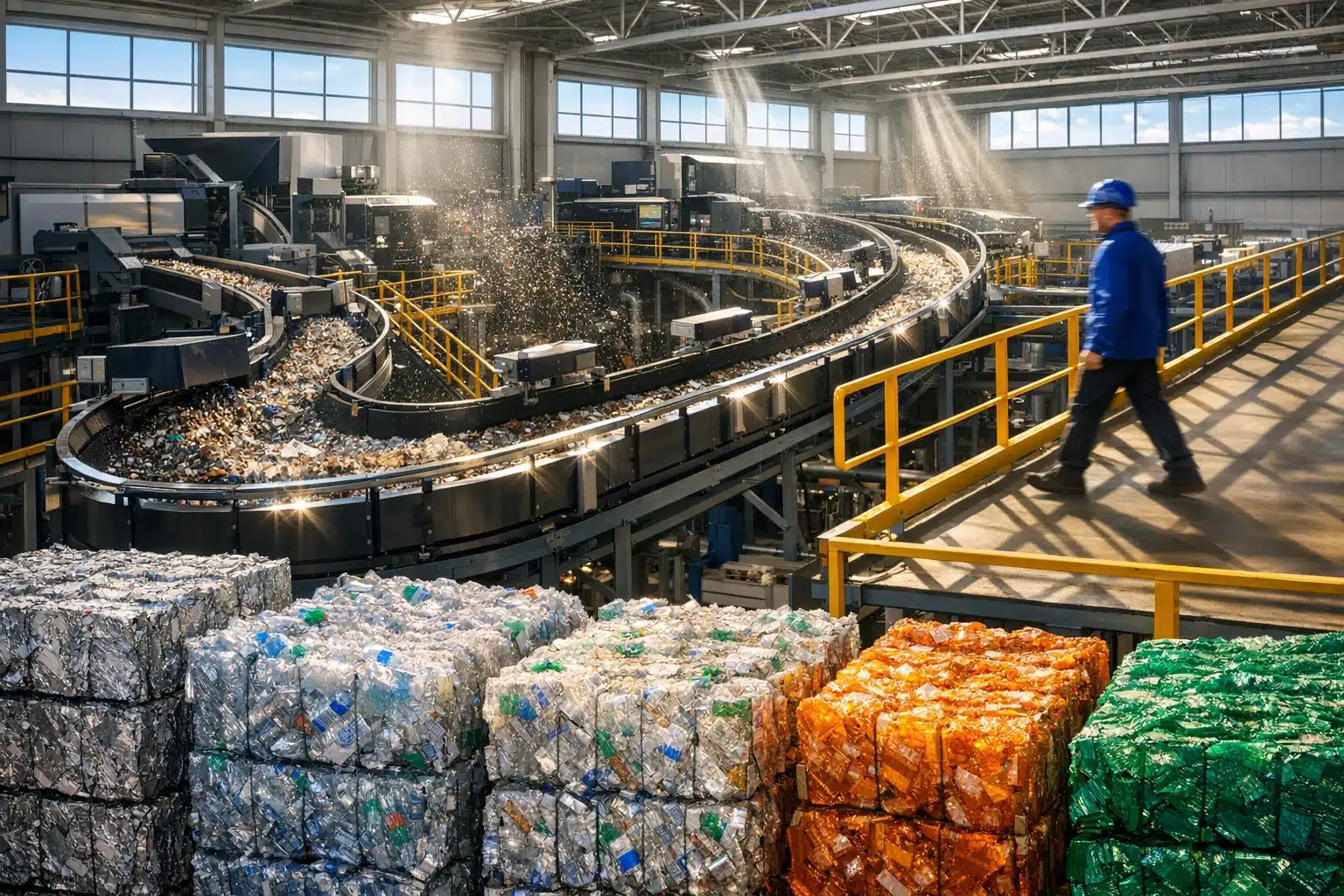
Waste management Job: sector structure and processes.
Trash looks ordinary at the curb, yet the system behind it is one of the most complex public service and industrial networks in modern life. Every bag collected sets off decisions about transport, sorting, recycling, treatment, compliance, and cost. For job seekers, employers, and students, waste management opens a field where operations meet sustainability and regulation meets innovation. This article maps the sector, compares career paths and companies, and explains how an MBA can fit the industry in different national contexts.
The Industry at a Glance: Outline, Structure, and Why It Matters
Before looking at jobs, companies, or study options, it helps to see the waste sector as a chain rather than a single activity. Many people imagine waste management as collection trucks and landfills, but that picture is only the front door. In reality, the industry includes route planning, transfer stations, material recovery facilities, recycling plants, hazardous waste treatment, compliance systems, data reporting, circular economy consulting, and increasingly, digital monitoring. The journey of a discarded bottle is part logistics puzzle, part chemistry lesson, and part public policy debate.
A useful outline for this topic looks like this:
- How the waste management sector is structured
- What kinds of jobs exist across operations, engineering, compliance, sales, and management
- How waste management companies differ by size, specialization, and business model
- Which core processes turn mixed waste into recyclables, energy, or final disposal streams
- How an MBA or related management degree can support leadership roles in the field
The importance of this sector is hard to overstate. According to World Bank estimates, the world generates more than 2 billion tonnes of municipal solid waste annually, and the total is expected to rise significantly by 2050 as urbanization and consumption expand. That means waste management is not a side issue for cities and businesses; it is part of the operating system of modern economies. Poorly managed waste increases public health risks, pollutes water and soil, and drives avoidable greenhouse gas emissions. Well-managed waste systems, by contrast, improve sanitation, recover materials, reduce landfill dependence, and create skilled employment.
The sector is usually divided into municipal, commercial, industrial, hazardous, biomedical, construction, organic, and electronic waste streams. Each stream follows different rules, technologies, and customer needs. Municipal waste focuses on households and public sanitation. Industrial waste often requires customized handling contracts. Hazardous and medical waste involve strict legal controls and trained personnel. E-waste adds questions of recovery value, data security, and global supply chains.
This structure matters because it shapes career decisions. A graduate interested in environmental compliance may thrive in hazardous waste management, while a professional with strong operations skills may fit route optimization or facility management. Someone with an interest in finance or leadership may look toward corporate strategy, ESG reporting, or public-private partnerships. In short, waste management is not one job market; it is a broad ecosystem with many doors.
Waste Management Jobs: Roles, Skills, Salaries, and Career Paths
Waste management jobs cover far more ground than many candidates expect. Entry-level roles often begin in collection, sorting, transfer operations, customer support, or field supervision. From there, the ladder can rise into safety management, plant operations, environmental compliance, procurement, route analytics, engineering, sustainability consulting, or executive leadership. One reason the field stays resilient is that waste does not disappear during economic uncertainty. Households still generate refuse, cities still require sanitation, and regulated industries still need lawful disposal and reporting.
The largest job families in the sector usually include:
- Collection and transportation roles such as drivers, helpers, dispatchers, and route supervisors
- Facility roles such as sort line operators, mechanics, plant technicians, maintenance staff, and operations managers
- Environmental and technical roles such as chemists, environmental engineers, landfill gas specialists, and water treatment personnel
- Corporate roles such as sales managers, procurement specialists, compliance officers, HR staff, finance analysts, and business development managers
- Public sector and advisory roles such as municipal planners, policy analysts, auditors, and sustainability consultants
Skills vary sharply by role. Frontline operations jobs demand safety awareness, physical reliability, and process discipline. Supervisory positions need scheduling, labor management, and incident reporting. Technical roles require knowledge of environmental law, waste classification, emissions control, hazardous materials handling, or mechanical systems. Management roles increasingly ask for data literacy, because companies now track route efficiency, contamination rates, diversion performance, fuel costs, and customer retention in near real time.
Pay also varies by country, regulation, union structure, and specialization. Collection workers and drivers can earn steady wages with overtime potential, especially in regulated urban systems. Engineers, hazardous waste specialists, and compliance managers generally command higher salaries because the risk and knowledge burden is greater. Sales and business development positions can also be lucrative, especially where commercial contracts or recycling commodity markets are strong.
Career progression often rewards practical competence more than glamour. A depot supervisor who can reduce missed pickups, improve safety records, and control fuel use becomes valuable very quickly. Likewise, a compliance manager who prevents fines and keeps reporting accurate can save a firm far more than their salary. That is one of the hidden truths of this field: waste management values people who keep complex systems calm, legal, and efficient. For job seekers who prefer visible impact over buzzwords, that makes it a compelling career path.
Waste Management Companies: Types, Services, Business Models, and Employer Comparison
Waste management companies range from local family-run haulers to multinational environmental services groups. Some focus on household collection, while others specialize in industrial cleaning, hazardous waste treatment, recycling technology, composting, medical waste, or waste-to-energy systems. Understanding these company types is essential for both job seekers and clients, because the workplace culture, risk profile, and growth opportunities can differ dramatically.
Broadly speaking, companies in this sector fall into a few common categories. Municipal service providers work through city contracts and prioritize reliability, route performance, and public accountability. Commercial and industrial operators serve businesses, factories, retail sites, warehouses, and construction projects. Recycling specialists focus on material recovery, baling, resale, contamination management, and commodity price exposure. Hazardous waste firms handle the most tightly controlled streams, where compliance failures can be expensive and dangerous. Integrated environmental groups combine several services and may operate across multiple regions or countries.
Well-known companies in global markets include firms such as WM, Republic Services, Veolia, Suez, Clean Harbors, and many strong regional operators. Mentioning them is useful for context, but scale does not automatically mean a better employer or a better vendor. Large firms may offer structured career paths, formal training, wider benefits, and more advanced technology. Smaller firms may provide faster responsibility, closer contact with leadership, and more flexible roles. The right fit depends on a person’s goals.
When comparing companies, the most useful questions are practical:
- What waste streams does the company handle?
- How strong is its safety culture and compliance record?
- Does it invest in fleet modernization, automation, and employee training?
- Is revenue based mainly on public contracts, private clients, commodities, or treatment fees?
- What promotion paths exist beyond the initial role?
The business model matters because it shapes stability. A company heavily exposed to recyclable commodity prices may see margin swings when paper or plastics markets weaken. A municipal contractor may enjoy predictable revenue but face strict service level requirements and political scrutiny. A hazardous waste firm can generate strong margins, yet its staff operate under higher legal and technical pressure. Construction and demolition companies may grow rapidly during building booms and slow during downturns.
For job seekers, this means the name on the truck is only the beginning of the story. Look underneath at service mix, regulatory intensity, equipment quality, and leadership style. In waste management, the strongest employers are rarely defined by slogans. They are defined by how they train people, maintain assets, manage risk, and adapt as the circular economy becomes more than a conference phrase.
From Bin to Resource: Core Waste Management Processes and Operational Challenges
If jobs are the people and companies are the institutions, processes are the machinery of the entire sector. Waste management runs on a sequence of linked operations, and weak performance in one stage can undermine the rest. A city can promote recycling loudly, but if collection routes are inconsistent, contamination rises. A company can invest in sorting equipment, but if incoming waste is badly segregated, recovery rates suffer. The process chain is where policy ambition meets operational reality.
The core waste management process usually follows this order:
- Generation and segregation at source
- Collection and transportation
- Transfer and consolidation
- Sorting, recovery, and treatment
- Final disposal or energy recovery
- Monitoring, reporting, and compliance review
Source segregation is often the most important step because it influences cost and recoverable value downstream. Clean paper, metals, organics, and certain plastics are easier to process when separated early. Mixed waste raises contamination rates and often pushes more material toward landfill or low-value treatment. This is why many cities and companies invest in public education, container design, color coding, and service rules.
Collection is a logistics-heavy stage shaped by geography, traffic, fuel prices, labor rules, and customer density. Route optimization software has become increasingly important because small gains in time and distance can produce major savings at scale. Transfer stations then consolidate waste so that long-haul transport becomes more efficient. From there, materials may go to recovery facilities, composting plants, anaerobic digestion units, incineration sites, landfill cells, or specialized treatment plants.
Modern waste systems also face new challenges. E-waste contains valuable metals but requires careful dismantling and pollution controls. Organic waste can support composting or biogas production, yet contamination with plastics remains a major obstacle. Landfills need leachate management and gas capture to reduce environmental harm. Extended producer responsibility rules are changing packaging economics in several countries, placing more pressure on manufacturers and service providers to document outcomes.
The broader trend is a move from simple disposal toward resource management. In that shift, waste is treated less like an endpoint and more like a material flow to be measured, reduced, recovered, or redesigned. It sounds almost poetic, but it is also deeply practical: the future of the sector will belong to operators who can turn messy inputs into cleaner outputs with lower cost, lower risk, and better data.
MBA in Waste Management in Different Countries: Program Options, Career Value, and How to Choose
The phrase MBA in waste management is appealing, but in practice the academic market is more nuanced. In many countries, a student will not find a large number of degrees with that exact title. Instead, the relevant pathways are usually one of three types: an MBA with a specialization in sustainability or operations, a master’s degree in environmental management or waste management, or an infrastructure and public policy program with circular economy content. That distinction matters because the right qualification depends on whether you want technical depth, management breadth, or public sector leadership.
Because the country in question has not been specified, it is helpful to compare common patterns across major education markets. In the United States, candidates often pursue an MBA paired with operations, supply chain, sustainability, or environmental compliance experience, then enter waste, utilities, logistics, or ESG roles. In the United Kingdom and parts of Europe, circular economy, resource management, and environmental policy are more visible in postgraduate offerings, sometimes through specialized master’s programs rather than classic MBAs. In India, interest is growing through sustainability management, environmental engineering, urban infrastructure, and solid waste management programs, supported by expanding urban waste challenges and public-private participation. In all cases, the strongest route is usually the one that aligns with local regulation and employer demand.
When evaluating a program, focus on these factors:
- Does the curriculum include operations, environmental law, finance, and sustainability strategy?
- Are there internships, field projects, or industry partnerships with sanitation, recycling, utilities, or infrastructure firms?
- Is the degree recognized by employers in your target country?
- Will the program prepare you for commercial leadership, plant management, consulting, or public administration?
- Does it teach data analysis, because modern waste management is increasingly metric-driven?
An MBA is most useful for professionals aiming at supervisory and strategic roles: regional operations manager, business development lead, sustainability manager, contract manager, or director of environmental services. It can also help entrepreneurs building recycling, collection, composting, or waste-tech ventures. Still, an MBA is not a magic ticket. In this sector, employers often value regulatory knowledge, operational credibility, and safety experience just as much as classroom theory.
The smartest approach is to treat the degree as a lever, not a label. If your country has few programs called MBA in Waste Management, do not be discouraged. Look for the combination of management education, sector exposure, and practical projects that will make you effective in real systems. Waste management rewards people who can think broadly, act precisely, and lead under constraint. A good MBA should teach exactly that.
Conclusion: What This Means for Job Seekers, Employers, and Future Managers
For anyone exploring waste management jobs, the main takeaway is simple: this is a serious industry with real complexity, steady demand, and multiple career ladders. It includes frontline service, technical problem-solving, compliance work, commercial strategy, and public policy. That mix makes it attractive to people who want practical work with visible social value. If you are entering the field, learn the waste stream, learn the regulations, and learn how operations actually run on the ground.
For those comparing waste management companies, the smart move is to look past surface branding. Ask what services the business provides, how it manages safety, whether it invests in equipment and training, and how exposed it is to contract risk or commodity swings. A strong employer in this sector is usually one that combines operational discipline with long-term investment in people and systems. A strong service provider is one that can document performance, stay compliant, and adapt as regulations and recovery targets evolve.
For students considering an MBA in waste management in a specific country, clarity matters more than naming. Many valuable programs will sit under sustainability, environmental management, operations, infrastructure, or circular economy rather than carry the exact phrase you searched for. Choose a program that connects management training with field exposure and employer relevance in your local market. In a sector built on constant flows, the best education is one that helps you manage movement, cost, risk, and change.
Waste management may begin with what society throws away, but the careers built around it are anything but disposable. This field needs disciplined operators, thoughtful managers, and people who can translate environmental ambition into systems that work every day. If that combination of purpose and practicality appeals to you, it may be time to look at the industry not as a fallback option, but as a long-term professional destination.